01
Advanced 5-Axis CNC Machining
Complex geometries, angled features, multi-sided components and tight positional relationships machined in fewer setups.
Capabilities
Precision 3-axis and 5-axis CNC milling and CNC turning for complex, tight-tolerance components — programmed, cut and inspected in-house.
Complex geometries, angled features, multi-sided components and tight positional relationships machined in fewer setups.
High-speed vertical milling for brackets, plates, housings, manifolds and fixtures — accurate, repeatable, production-ready.
Precision lathe work for shafts, bushings, spacers and round stock — concentric, on-spec, production-ready.
Permanent part numbers, serial numbers, logos, identification marks and traceability information on machined components.
One-off prototypes through repeat production runs, from your print or STEP file to finished, inspected components.
Stainless, tool steels, titanium and engineering plastics — machined with the tooling and strategies each one demands.
01
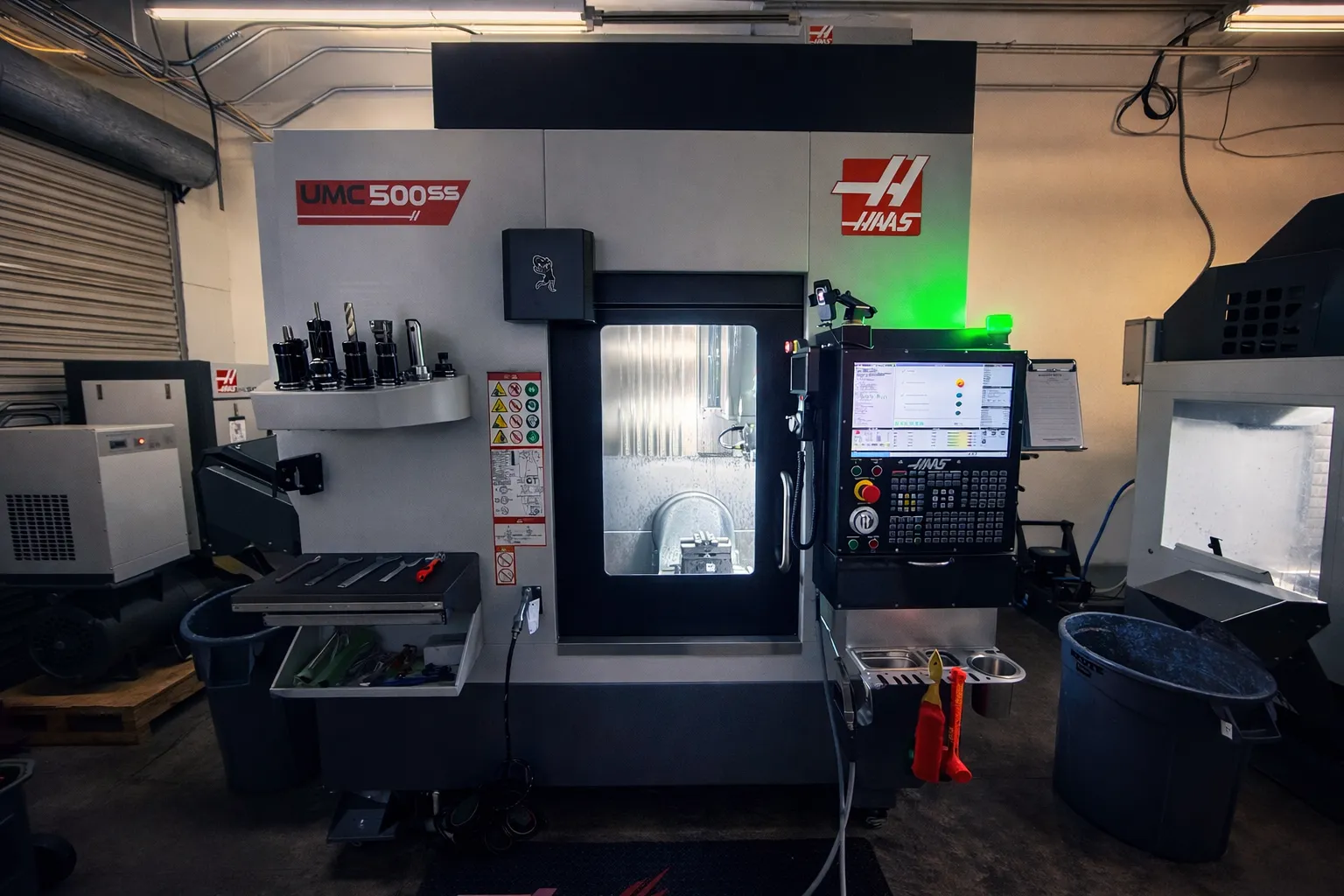
Complex geometries, angled features, multi-sided components and tight positional relationships machined in fewer setups. Our 5-axis capability allows us to tackle intricate components while improving accuracy, repeatability and surface consistency.
Every time a part comes out of the vise and goes back in, it picks up error. Machining in a single setup removes those handoffs — which is what holds true position across the whole envelope rather than only within one face, and what keeps surface finish consistent across blended faces.
02
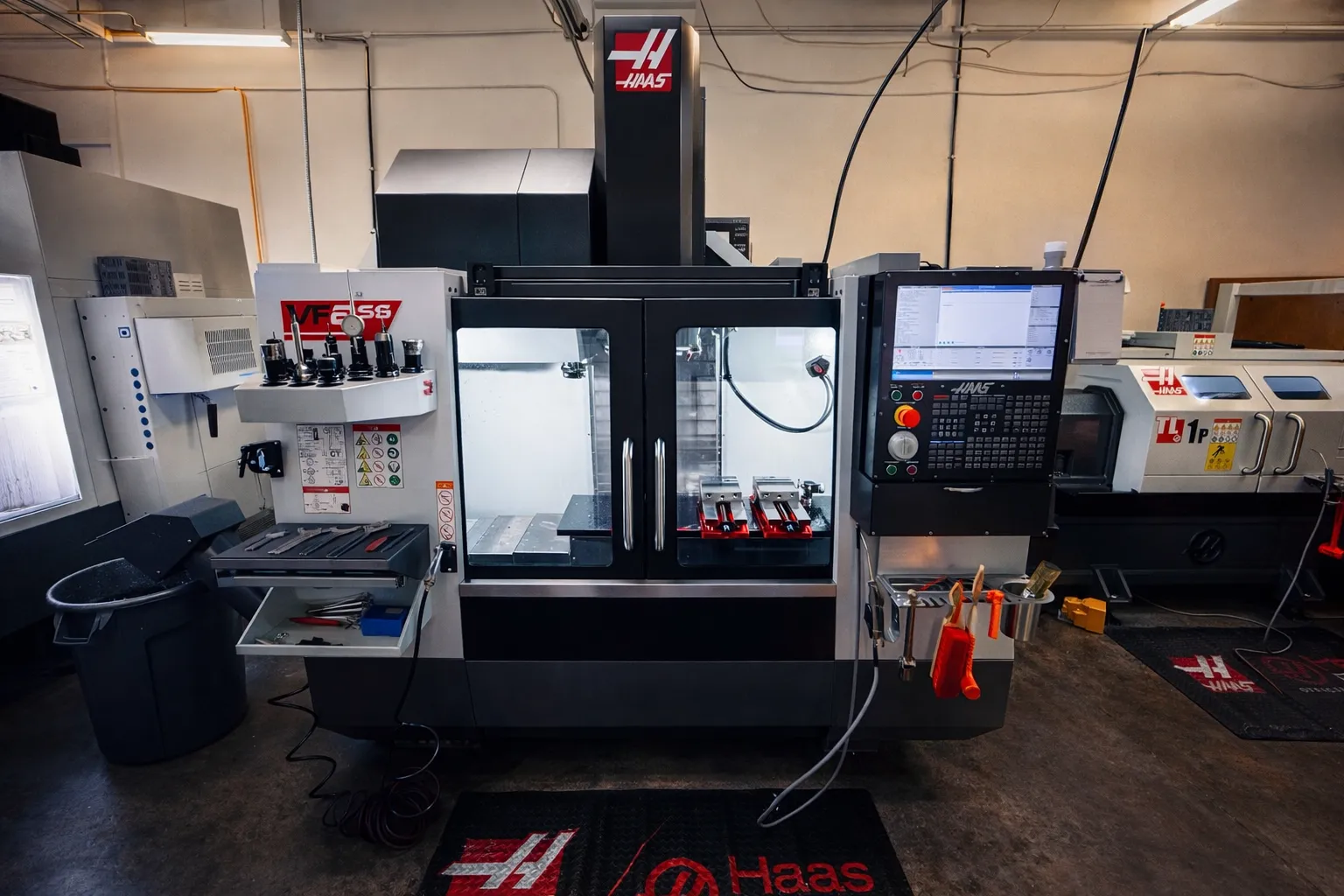
High-speed vertical milling on our Haas VF-2SS. Brackets, plates, housings, manifolds, fixtures and adapter blocks — the precision components a machine, an assembly or a line cannot run without.
We program, cut and inspect every job in-house, so what we quote is what we run. That matters most on repeat work: the second batch comes off the same program, on the same setup, to the same numbers as the first.
03
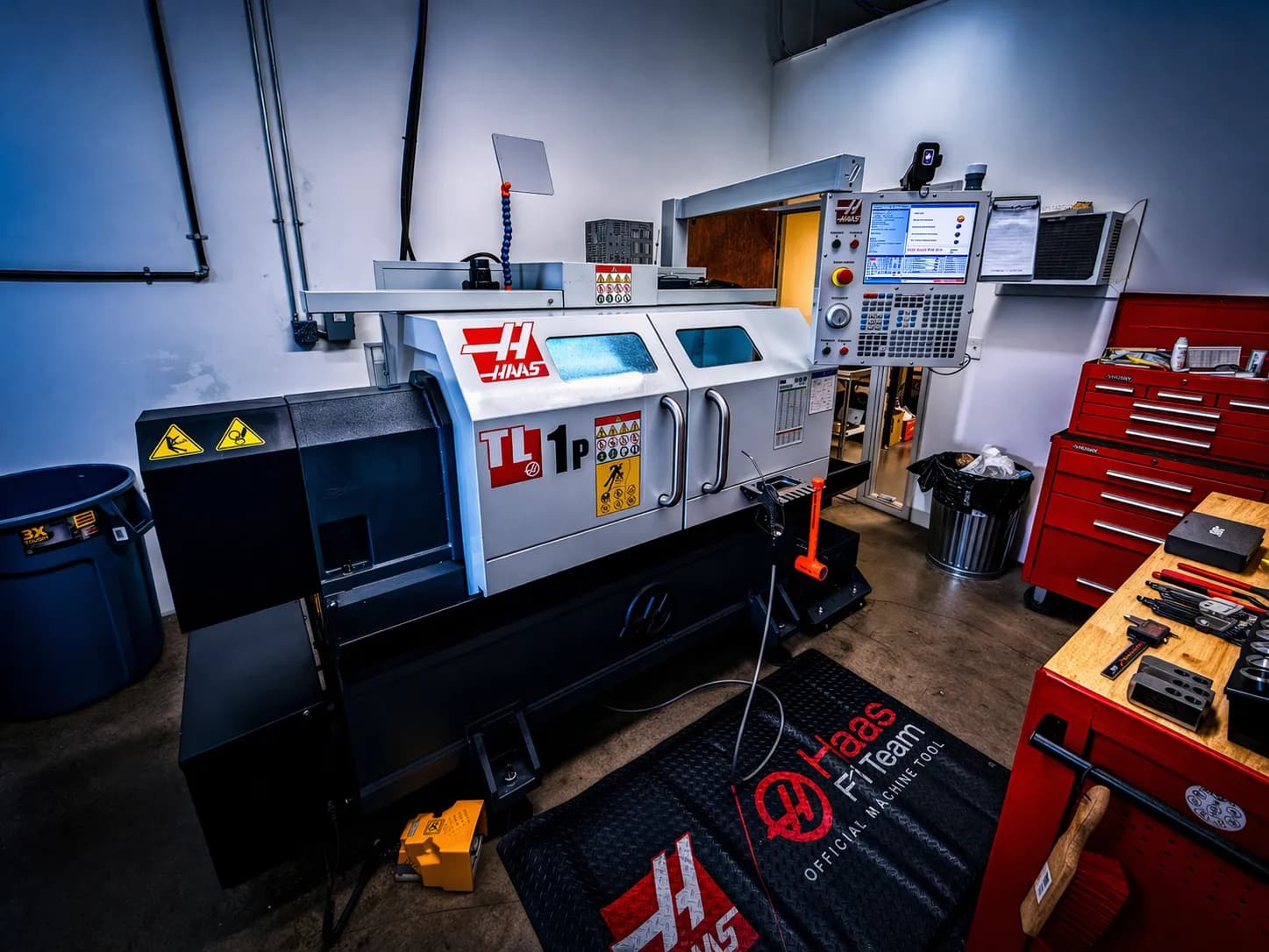
Shafts, bushings, spacers, pins, standoffs, threaded bodies and anything else that starts as round stock, turned on our Haas TL-1P. Turned work is judged on concentricity and finish, and both are set long before the tool touches metal — in the workholding, the tooling, and the feeds we choose.
We run turning as one-off prototypes and as repeat production, and we are equally set up for either.
04
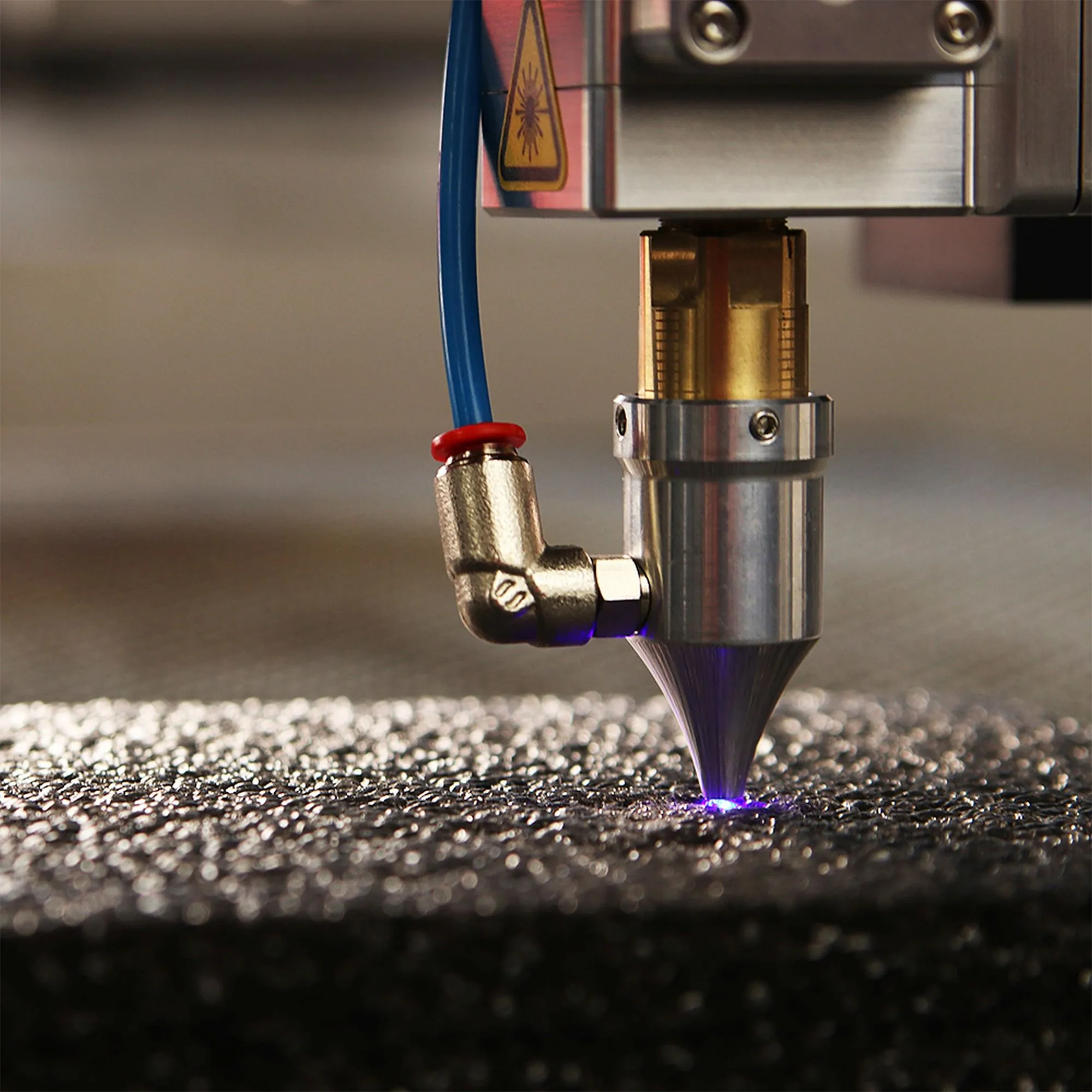
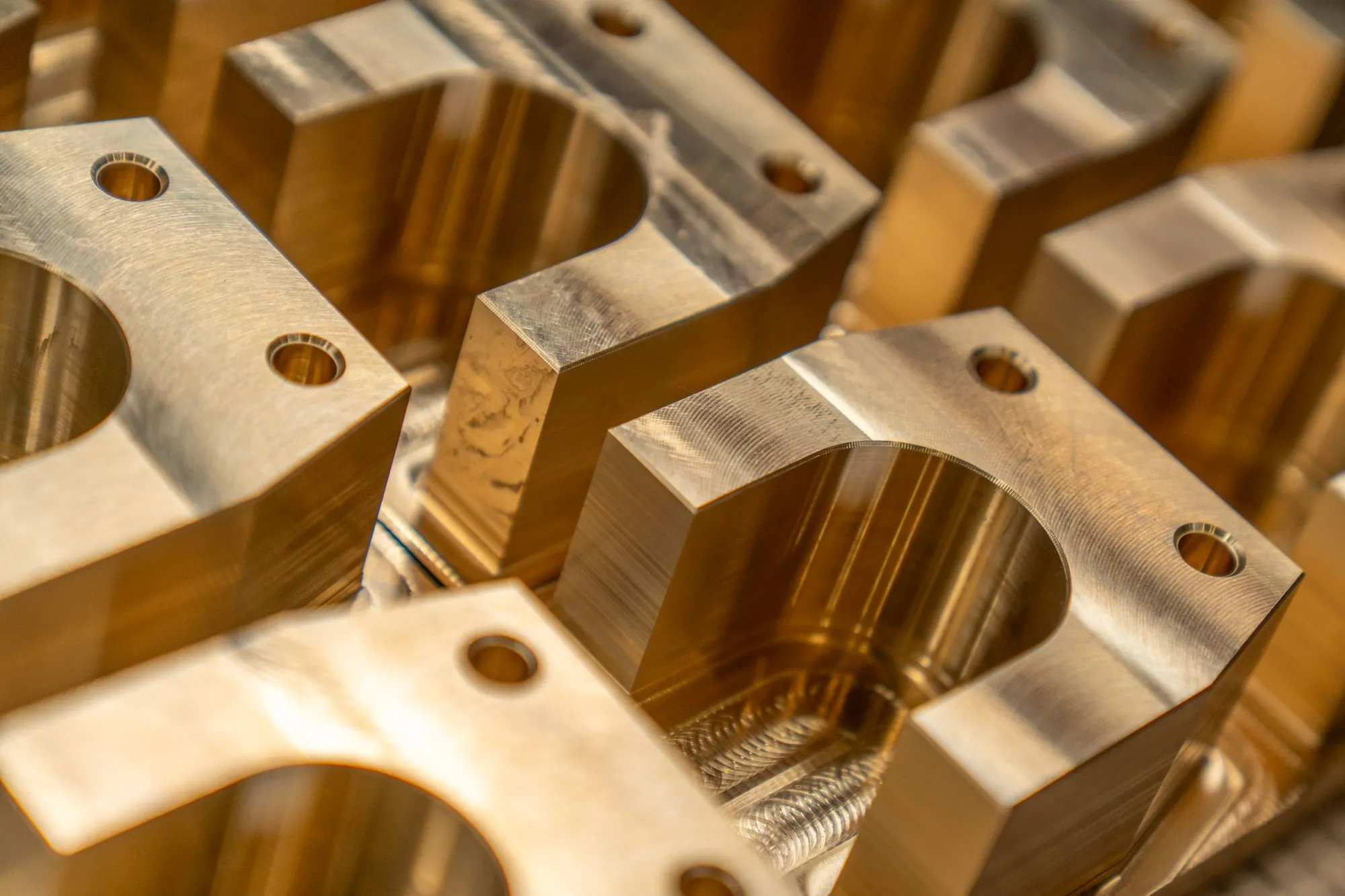
Permanent part numbers, serial numbers, logos, identification marks and traceability information on machined components — marked into the material rather than printed on and worn off.
Marking is usually the last operation on a part we already machined, which keeps it registered to the features it refers to. We also mark customer-supplied components.
05
Send a drawing or a STEP file and we will tell you what it takes to make it: where a feature will drive cost, where a material change buys you margin, and where the print calls for a tolerance the part does not need.
The same programs, fixturing and inspection carry from the first article through to repeat production, so a part that qualifies as a prototype is the part you receive at quantity.
06
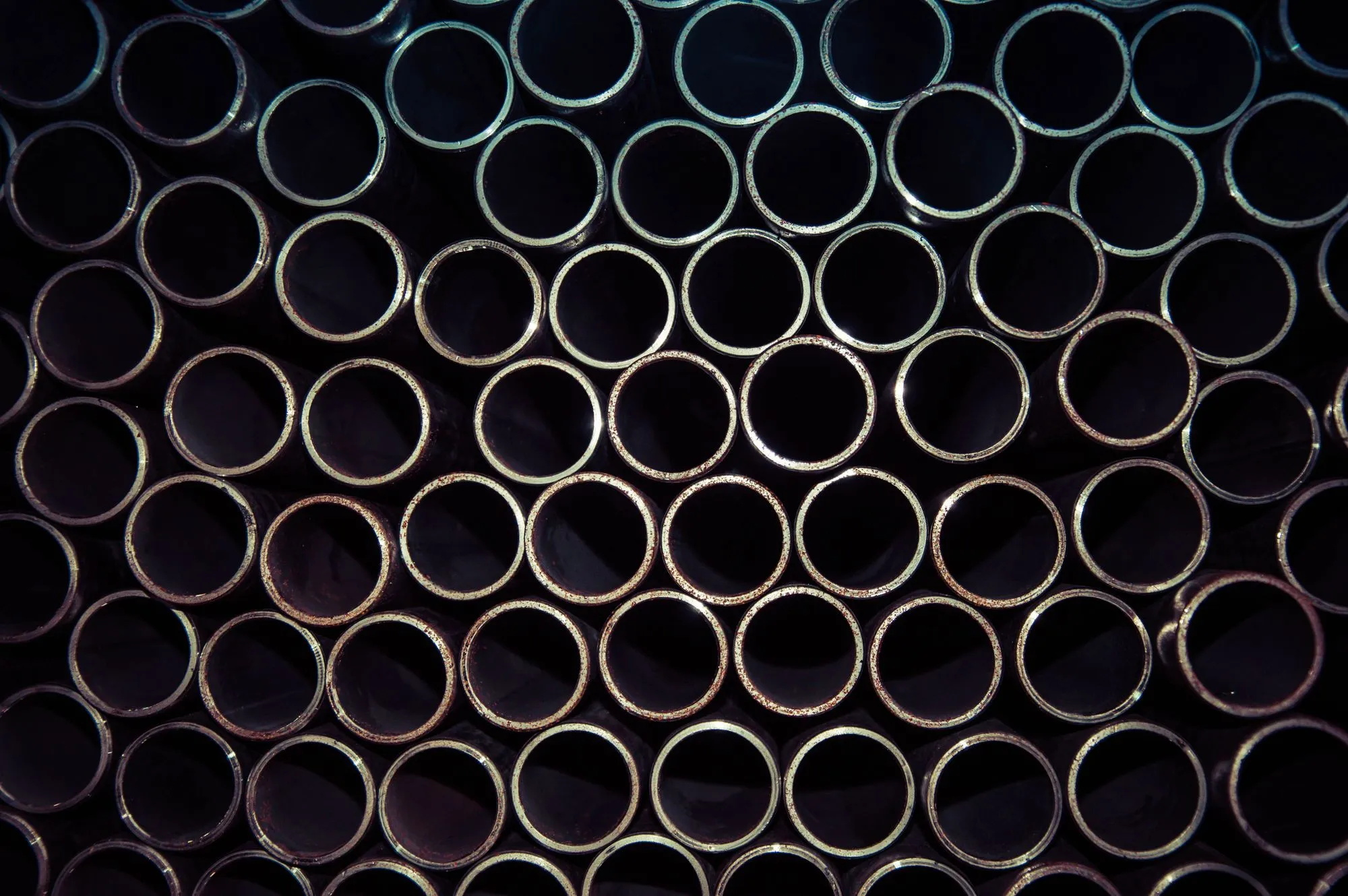
Hardened tool steels, work-hardening stainless, titanium and engineering plastics each fail in their own way, and each needs its own tooling, feeds and workholding to hold size and finish.
We machine across that range routinely. If you are unsure what a component should be made from, say so on the RFQ — recommending a material is part of the quote.
Equipment
Modern Haas CNC equipment, programmed and maintained in-house. What each machine is for, and what it lets us take on.
5-axis CNC machining. Complex, multi-sided geometry in a single setup — the machine behind our tightest positional work.
High-speed vertical CNC milling. Fast, repeatable 3-axis work across prototypes and production runs.
Precision CNC turning. Concentric shafts, bushings, spacers and threaded bodies.
Materials
Common production grades through demanding alloys and engineering plastics. If what you need is not listed, ask — the answer is usually yes.
303, 304, 316, 17-4 PH, 420
6061, 7050 and other grades
4140, A2, DC53, 1018
Free-machining and high-conductivity grades
PEEK, Ultem, Delrin, Nylon
Titanium and other demanding alloys
Industries
We hold tight tolerances where a drawing calls for them. Not every feature needs one, and quoting a whole component at its tightest tolerance is how a shop ends up expensive for no reason — so call out the dimensions that are critical and we will put the time there.
Inspection happens in-house alongside programming and machining, which is what lets us catch a problem while the setup is still on the machine.
A drawing or a STEP file and a quantity is enough to start. If the component has a critical fit, a surface finish requirement, or a material you have already qualified, include it — those are the constraints that change how a part is programmed and fixtured.
If you have not settled on a material, say so. Recommending one is part of the quote.
By the numbers
Ready when you are
Send your drawing, STEP file and quantity. We'll review manufacturability, material requirements, tolerances and lead time and get back to you quickly.